
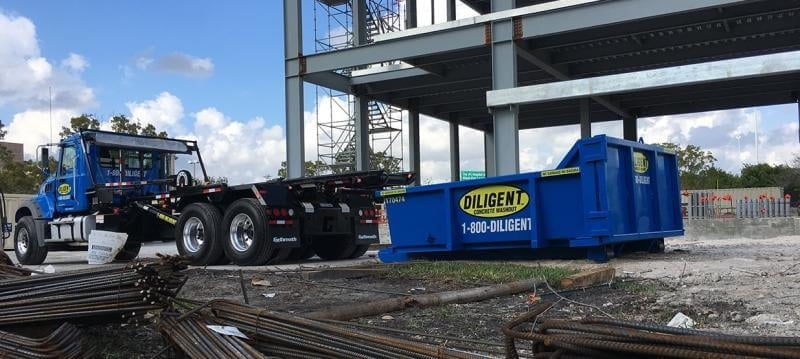
Every construction project needs a line item for dumpster rental, but construction dumpster rental cost changes from job to job. A 10-yard container for a bathroom remodel isn’t priced the same way as a 40-yard unit on a demolition site, and even similar projects can land on different totals depending on what’s going into the dumpster and how long it stays on-site. Size sets the starting cost, and debris weight decides whether that price holds. Rental duration and job site location can push it higher or bring it back down.
What Is the Average Construction Dumpster Rental Cost?
A standard 7 to 14-day construction dumpster rental typically runs somewhere between $250 and $850, depending on size and what’s being thrown away. Smaller containers land toward the bottom of that range, and larger units built for commercial jobs or major renovations land toward the top. Location changes the number too, since landfill tipping fees and local demand both factor into what a hauler charges.
Most quoted rental prices bundle several things into one flat rate:
- Delivery to the job site
- Pickup once the rental period ends
- A set rental period, usually 7 to 14 days
- A weight allowance, typically measured in tons
- Disposal fees at the landfill or recycling facility
The terms “construction dumpster rental” and “roll off dumpster rental” may seem interchangeable, but they are notably different. Roll off dumpster rental cost generally refers to the container type itself, a large open-top bin delivered and picked up by truck. Construction dumpster rental cost usually accounts for the heavier debris and stricter weight limits that come with job site material like concrete, roofing, and drywall, even when the container itself is identical.
Because rates shift by market, debris type, and hauler, these ranges work as a starting point for budgeting. A customized quote from a local provider is usually the most reliable way to know what a specific project will cost.
What Factors Affect Construction Dumpster Rates?
Dumpster Size
Larger dumpsters cost more, but not always proportionally, since bigger containers often deliver a better price per cubic yard than renting two smaller ones back to back. The four most common sizes are 10-, 20-, 30-, and 40-yard dumpsters, and pricing climbs from roughly $250 at the small end to $850 at the largest for a standard rental period. The 20-yard size sees the most rental volume across residential and light commercial jobs, since it balances capacity against what fits on a typical driveway or job site.
Type of Construction Debris
Not all debris costs the same to haul away. Concrete, wood, drywall, roofing shingles, metal, mixed construction debris, and general renovation waste each carry different disposal costs, largely because they weigh differently and get processed at different facilities. Concrete and shingles are dense and hit weight limits fast even in a partially filled container, while wood and drywall take up more volume relative to their weight. Mixed debris, loads that combine several material types, often costs more to process than a single clean material stream, since sorting adds labor on the disposal end.
Weight Limits
Every construction dumpster rental includes a weight allowance, usually somewhere between 1 and 2 tons for a 10-yard container and up to 4 to 6 tons for a 40-yard unit. The weight allowance is baked into the quoted price. Go over it, and overage charges typically add $40 to $100 or more per additional ton. Heavy materials like concrete, dirt, and roofing shingles are the most common reason contractors exceed their allowance, since dense debris fills the weight limit long before the container looks full.
Rental Duration
Standard rental periods run 7 to 14 days, which covers most residential and small commercial projects without an issue. Projects that stretch longer than the standard window usually incur additional daily or weekly fees, often in the $5 to $15 per day range. Planning the rental period around a realistic project timeline, rather than the optimistic one, helps avoid paying for extra days nobody accounted for.
Disposal & Landfill Fees
Tipping fees, what the landfill or transfer station charges per ton to accept debris, are baked into most quoted rental prices, but they vary by region and by facility. Recycling facilities often charge less than a traditional landfill for accepted materials, which is part of why sorting and recycling can lower the total cost of a project’s waste removal, not just its environmental footprint.
Choosing the Right Dumpster Size for Your Project
Matching dumpster size to project scope is one of the simplest ways to control cost, since an oversized container means paying for space that never gets used, and an undersized one means a second delivery, a second delivery fee, and a delayed schedule.
- Bathroom remodel: A 10 or 15-yard container is usually enough for fixtures, tile, and drywall.
- Kitchen renovation: A 20-yard dumpster handles cabinets, countertops, and appliances without pushing weight limits too fast.
- Roofing project: Shingles are dense, so a 20-yard container is common even though the volume looks modest.
- Home addition: A 20 or 30-yard dumpster covers framing scraps, drywall, and general construction waste.
- Commercial construction: Larger commercial jobs often call for a 30 or 40-yard container, sometimes multiple units cycled through the project.
- Demolition: Full demolition debris is heavy and voluminous, and a 40-yard dumpster is typically the starting point.
Selecting the correct size upfront reduces the odds of overage fees, extra pickups, and the added cost of renting a second unit mid-project. Getting it wrong in either direction, undersized or oversized, usually costs more than the time it takes to estimate the construction debris a project will actually generate. For contractors managing ongoing construction dumpster rental needs across multiple job sites, matching size to scope on the front end keeps construction waste dumpster rental costs predictable from one project to the next.
Hidden Fees Contractors Should Know About
The quoted rental price doesn’t include everything a project ends up paying for. A few charges tend to show up only after the fact:
- Overage fees for exceeding the included weight allowance
- Prohibited materials charges when hazardous waste, tires, or certain electronics end up in the container
- Extra rental days beyond the standard rental period
- Permit requirements for dumpsters placed on a public street rather than private property
- Failed pickup attempts, often billed if a truck can’t access an overfilled or blocked container
- Overfilled dumpsters, since material piled above the fill line usually isn’t covered under the standard rate
- Fuel or transportation surcharges, which some haulers apply for deliveries outside their standard service radius
Reading the rental agreement closely, and asking a provider directly what isn’t included, can help you avoid surprises.
Recycling Construction Debris Can Lower Disposal Costs
Recycling construction debris can directly lower disposal costs, on top of reducing what a project sends to a landfill. When concrete, asphalt, brick, and metal get diverted to a recycling facility instead, contractors typically see:
- Reduced landfill waste
- Potentially lower disposal costs, since recycling facilities often charge less per ton than landfills for accepted materials
- Improved sustainability outcomes for the project
- Easier compliance with green building requirements some projects call for
Concrete and asphalt in particular are commonly recycled into aggregate for future construction use, which keeps heavy material out of landfills and often comes with a lower processing fee than standard disposal. Diligent’s concrete recycling program handles that separation on the contractor’s behalf. For contractors generating large volumes of construction debris or renovation waste, working with a provider that separates recyclable materials rather than sending everything to a single landfill stream is one of the more overlooked ways to manage cost.
When You May Need More Than a Dumpster Rental
Larger or concrete-intensive projects often need more than a dumpster on-site. Pouring, cutting, or finishing concrete generates washout water and slurry that can’t legally go down a storm drain or sit exposed on a job site. Diligent’s concrete washout services contain that material before it becomes a violation, keeping the job site protected and the project compliant with EPA and local stormwater regulations, the same regulations inspectors check before signing off on a project.
For contractors already renting a dumpster for general debris, adding washout containment for the concrete portion of the job is a natural pairing rather than a separate hassle, and it closes a compliance gap that a dumpster alone doesn’t cover.
Get the Right Dumpster for Your Next Construction Project
Construction dumpster rental cost depends on a handful of interacting variables. Size, debris type, weight limits, rental duration, and local disposal fees all play a part, and none of them move independently of the others. Getting the size right from the start and understanding what’s included in a quoted price go a long way toward avoiding the fees that turn waste removal into a budget surprise instead of a predictable line item.
Diligent works with contractors managing everything from a single bathroom remodel to full commercial demolition. Pricing stays transparent and delivery runs on schedule, with every construction waste dumpster rental sized to the project instead of pulled from a one-size-fits-all lineup.


